Skip navigation

Unit 1 post: Early Images of Virginia Images posted on January 20, 2009

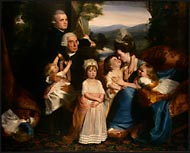
Unit 2 post: Copley Family Portrait posted on February 6 2009

Unit 3 post: Alien Menace posted on February 23 2009.

Unit 4 post: Analyze a Thomas Nast Cartoon 1876 post on March 2 2009.

Research post 1 summary: Fever 1793 posted on January 15 2009

Research post 2-3: Historical topics posted on February 2 2009

Research post 4-5: Historical documents posted on February 25 2009.

Research post 6: Essay of Fever 1793 posted on February 25 2009. updated on March 2

Comment 1 on another students blog: The first comment was on Rachel Askin’s blog. I commented about her unit 3 post which was about the Daguerreotype which was the first camera invented in order to take portraits.  http://raches01.wordpress.com/2009/01/30/unit-3-post-daguerreotype-process/

Comment 2 on another students blog: The second comment I did was on Charri Lark’s blog. I commented on her summary of the children’s book that she choose. http://charr89.wordpress.com/2009/01/16/childrens-book-selection/#comments

Works Cited

Anderson, Laurie Halse. Fever 1793 New York: Simon & Schuster Books for Young Readers, 2000.

Arnebeck, Bob. A Historian’s view of Anderson’s Fever 1793. <http://www.geocities.com/bobarnebeck/children.html>

Karsch, G Carl. The Yellow Fever Connection. Carpenter’s Hall. Copyright 1999-2009. Independent Hall Association. <http://www.ushistory.org/carpentershall/history/fever.htm>

Powell, J.H. Bring Out Your Dead: The Great Plague of Yellow Fever in Philadelphia in 1793. Philadelphia: University of Pennsylvania Press, 1993<http://www.philadelphiahistory.org/akm/lessons/yellowFever>

At first this cartoon is very confusing because you can see someone handing a card to doll. This card says “this is milk” and the doll says, “Inflated humpty dumpty.” This cartoon was made by Thomas Nast in 1876. And this cartoon is impying the currency of America. I believe that doll represent the gold and the card represents the money. Before currency people used the methods of trade. Currency is a method of becoming one nation and developing citizenship amongst Americans.

Works Cited

Michael O’ Malley, “Analyzing Political Cartoons, “History Matters: The U.S. Survey Course on the Web, http://historymatters.gmu.edu/mse/sia/cartoon.htm, July 2002

http://www.childlit.info/index.php?title=Fever_1793_by_Laurie_Halse_Anderson

fever-1793

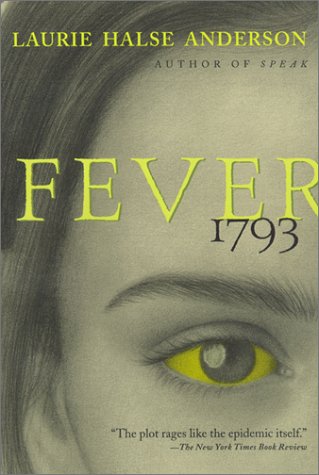
Fever 1793 By Laurie Halse Anderson

Fever 1793 by Laurie Halse Anderson is about how the epidemic yellow fever affected the life of a young girl, Mattie Cook. It takes you on a day by day journey of a young girl struggling to survive in a world that is dying and almost non-existent. Mattie’s story starts off in Philadelphia, Pennsylvania in 1793 during the dry and hot summer. Mattie helps her mother run the family coffee shop. The first occurrence of any illness is when the servant girl Polly mysteriously dies.

As weeks go on the epidemic has killed hundreds, Mattie’s mother becomes ill and diagnosed with yellow fever. A doctor comes to diagnose her mother and tells her that Dr. Rush, who is a prominent physician has been using the methods of purging and bleeding. So Dr. Kerr decides to drain Mattie’s mother and after that Mattie has to give her mom a bath every four hours. When the fever tends to get worse Mattie i travels into the country with her grandfather where Mattie becomes ill and is taken to Bush Hill hospital. After her recovery she traveled back the coffeehouse where her grandfather gets killed by two robbers. The book then goes on to  describe Mattie’s journey where she founds Eliza her old cook who was living with her brother Joseph. Joseph had two little boys and Mattie found a little girl named Nell. Mattie lived with them and soon helped other who were in need. When all of the children inhabited the yellow fever she took care of them at her coffee house. One morning a frost spread over Philadelphia, so everyone took their furniture outside to clean it of the fever. Mattie’s mom, who had traveled to the country had come back. The bigger sign of hope was that George Washington had returned home. In the end of the story Mattie had matured into a responsible adult; she got the coffeehouse up and running and she learned that life really does have a purpose and that every day should be valued.

Fever 1793 is a children fiction novel but even though it is fiction it is still is very educational. The hospital that Mattie went to when she inhabited the fever was called Bush Hill hospital. Bush Hill was actually the most prominent hospital used during the epidemic. Bush Hill was set up on Andrew Hamilton’s estate on Bush Hill and it was organized by a French physician, Dr. Deveze. http://www.philadelphiahistory.org/akm/lessons/yellowFever
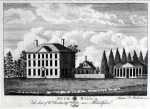
bush-hill-hospital1

http://www.ushistory.org/carpentershall/history/fever.htm

The doctor that was mentioned  was Dr. Rush. Dr. Benjamin Rush was the most common physician that stayed in Philadelphia during the epidemic. He used a method called purging and bleeding. He encouraged his patients to purge and then would extract large amounts of blood from them in hope of cleansing them from the virus. Dr. Rush became ill twice during the epidemic and he used his own techniques which worked for him. http://www.philadelphiahistory.org/akm/lessons/yellowFever

The epidemic was believed to be brought in by slaves coming from the Caribbean. Then it was transferred and spread by mosquitoes, it helped because that summer was especially hot and dry which was perfect weather for the insects. The coffeehouse still had customers in the beginning of the epidemic because it started by the docks and the water. The coffeehouse was six blocks away so it took a while for the disease to spread. When Dr. Kerr explained that Dr. Rush used the treatments of purging and bleeding it was said that Dr. Rush had not used those methods yet so Dr. Kerr couldn’t have referenced that information. Also the treatments of bathing the fever victim weren’t as popular as soaking the patients feet and letting them drink tea. When Mattie became ill it was September 12 which is the same date that the hospital was made a place for the victims to go and get treated. After Mattie recovered she went back to her coffeehouse and two robbers killed her grandfather. The city was said to be very dangerous when actually it was the opposite. Philadelphia was a place of helping volunteers. The major didn’t leave and he and volunteers offered help to people such as; helping bury the dead, transporting ill people to Bush Hill and giving money or bread to those in need. During the time banks, newspapers and the post office were still open. And watchmen volunteered at night. There were people like Eliza, the cook, who were African American and acted as nurses going from house to house helping those in need. The African Americans that immigrated were said to be immune to the fever and therefore more helpful to those who weren’t; however, they weren’t immune but they did still act as nurse. In the book it mentioned George Washington coming back home as a sign of hope; Governor Mifflin returned as did commercial businesses which really sparked hope to the people of Philadelphia. http://www.geocities.com/bobarnebeck/children.html

Works Cited

Anderson, Laurie Halse. Fever 1793 New York: Simon & Schuster Books for Young Readers, 2000.

Arnebeck, Bob. A Historian’s view of Anderson’s Fever 1793. <http://www.geocities.com/bobarnebeck/children.html>

Karsch, G Carl. The Yellow Fever Connection. Carpenter’s Hall. Copyright 1999-2009. Independent Hall Association. <http://www.ushistory.org/carpentershall/history/fever.htm>

Powell, J.H. Bring Out Your Dead: The Great Plague of Yellow Fever in Philadelphia in 1793. Philadelphia: University of Pennsylvania Press, 1993<http://www.philadelphiahistory.org/akm/lessons/yellowFever>

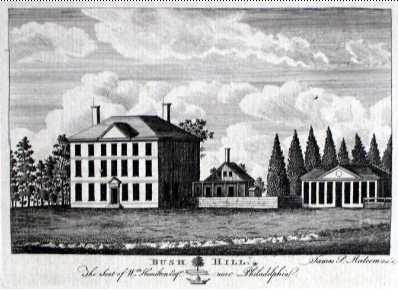
bush-hill-hospital

http://www.ushistory.org/carpentershall/history/fever.htm

Bush Hill, created by Alexander Hamilton was the hospital where Mattie Cook was taken when she was infected with Yellow Fever. The hospital was actually used, during the time of the yellow fever, as a hospital that cured Yellow Fever victims. One of the doctors mentioned in the book is Dr. Benjamin Rush who was one of the well-known doctors that used the method of purging and bleeding. It was accurate in the book when Dr. Kerr was treating Mrs. Cook that he referenced the purging and bleeding treatment to what was used by Dr. Rush.

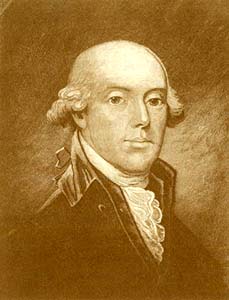
benjaminrush

http://www.philadelphiahistory.org/akm/lessons/yellowFever

Benjamin Rush was known as the most prominent physician during the time of the Yellow Fever epidemic. As stated before he commonly used his techniques purging and bleeding. He also used this method on himself when he became ill twice during the epidemic. Afterwards his methods were criticized by other doctors. Because Dr. Rush was used as an example of doctors in the book this qualifies that this fictional book actually carries information of real historical evidence. Even though the book is fictional it is still educational for children in educating them about what it was like to live during the time of the yellow fever epidemic.

I chose to do my post on the Alien Menace portrait.

alien2

http://chnm.gmu.edu/exploring/19thcentury/alienmenace/pop_alien2.html

My first thought on this picture was that it has to be some African American that was addressing some sort of council to discuss topics of freedom. It also crossed my mind that this could be happening in the time of the Civil War. I read further on and looked at another picture that discussed that the person in this picture is not African American but Catholic Irish. You wouldn’t think that the two could possibly look like each other but during the 19th century many Americans believe that the Irish were not “white”.  During the 19th century Ireland was going through rough times of famine so many of the Irish immigrated to America. Americans were very judgemental on the Irish because they believed that they had animal characteristics. This is why the title of the picture is “Alien Menace,” because Americans saw them as strange beings. The Irish didn’t speak English, weren’t very literate and didn’t know any skills in which would help them to earn labor. The reason that I believed at first that the man in the picture was African American was because the Irish were compared with the African Americans. They carried on the same low-paying jobs as African Americans. An example of this is a marriage certificate that states that the man and the women being married are both colored. The man is from Ireland and the women from Virginia.

ireland-couple

http://chnm.gmu.edu/exploring/19thcentury/alienmenace/pop_final.html

This is the picture of the married couple. As you can see they are both white not colored; but because they are seen as Irish they are depicted as African Americans. The cartoon of the man would be seen as more of an animal because the Irish were seen as dangerous.

Some Americans didn’t stereotype the Irish as animals but many did. This just proves how judgemental Americans were back in the 19th century. Just because some new ethnicity immigrated to Americas and didn’t same the share culture as them they were seen as different and thought they couldn’t become Americans. Now, fortunately Americans don’t view Irish in the same way. My opinion is that if Irish were eventually seen as Americans then why did it take African Americans so long to gain the same rights as the Irish, since the Irish and the African Americans were seen as equal. Was it because that the African Americans were seen more as visibly different then Americans? Even though African Americans still gained freedom, even though it took a long time, Americans are still judgemental. This affects our society and our culture.

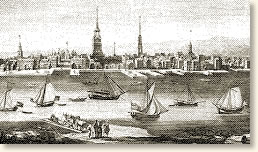
philadelphia-docks

A historical fact from the book Fever1793 the reason that the fever occurred was from Caribbean refugees that flocked to the docks of Philadelphia. The book doesn’t share the refuges flooding in but it does say in the very beginning that they were swarms of flies and mosquitoes that helped with the spread of the disease. In the book the summer was very dry and hot so it was a big reason why there were so many mosquitoes. http://www.eyewitnesstohistory.com/yellowfever.htm. Another thing about the book is the symptoms of the fever. Many of the characters in the book experienced a high fever, yellowing of the skin, and hemorrage. I looked up the symptoms on web md and i found the disease occurs primarily in high tropic climates such as South America but since Philadelhia was having a hot and dry summer it explained why the mosquitoes hit and spread. “Yellow fever goes through two cycles; the first one occurs when the disease is spread though primates; when animals get bitten by the infected mosquitoes, this cycle is called the sylvan cycle. The other cycle is when the fever spreads from human to human; the cycle is called the urban cycle.” Yellow Fever spread so rapidly causing a wide-spread epidemic. http://www.webmd.com/a-to-z-guides/yellow-fever. Another interesting fact was that Benjamin Rush who is most famoulsy known as a signer to the Declaration of Indepence was a doctor who stayed during the epidemic to treat patients. Rush had a very bizzare method of curing fever victims. “He would bleed the patients and would administer them large amount of mercury.” In the book this was a popular method; when Mattie Cook’s; the lead character, mother got infected with yellow fever the doctor came in and drained her blood.(Harvard)  http://ocp.hul.harvard.edu/contagion/yellowfever.html. Also, on this website it mentioned that one important hospital that was used for yellow fever patients was Bush Hill hospital. This was the hospital in the book that Mattie was taken to when she became ill.

Harvard University Library.2008. The President and Fellows of Harvard College. <http://ocp.hul.harvard.edu/contagion/yellowfever.html.>

Samuel Breck’s account appears in Hart, Albert Bushnell, American History Told by Contemporaries, vol. 3 (1929); Powell, John Harvey, Bring Out Your Dead, The Great Plague of Yellow Fever in Philadelphia in 1793 (1949). Ibis Communications. Inc. < http://www.eyewitnesstohistory.com/yellowfever.htm>

Web md. 2005-2009.< http://www.webmd.com/a-to-z-guides/yellow-fever.>

copley

The copley family portrait is a family made of a grandfather, father, mother and four young daughters. You can tell that since the father and the grandfather are wearing white wigs the family is very fortunate; most likely in the higher class range. The father is also standing up, with his shoulders facing away from the portrait; by this you can tell that the father holds the power in the family. The mother is paying attention to one of the daughters, showing affection towards her rather than her other child who looks like she is desperate for attention. The desperate child looks like she has a twin who is hanging on to the grandfather. The girl looks like she is holding a rattle but is still so desperate to get a little bit of attention from her grandfather. There is a doll on the ground which is sitting idly; the young girls that are craving  attention from the adults aren’t playing with the doll. The oldest girl is in the middle of the portrait; she isn’t hanging on to any of the adults which means that the oldest girl is the most independent; she most likely knows that she will not get the attention that her younger sisters crave. She is standing with a blank expression on her face with her arms crossed; you can tell that she is lonely but mature. The clothing in this portrait is elaborate; the girl’s clothing is made from vibrant colors, blue and gold. Back in the days it costs alot of money to make clothes from certain colors; so this proves again that the family is wealthy. The background is very scenic;  with mountains and trees; the colors in the portrait ties in withthe background because they are all contemporary colors that you would see in nature. To me this family doesn’t look like the “happy American family.”

When I here the word Indian I relate it to the movie Pocahontas; the Indians live in villages made of huts and they are clothes with decorated custom outfits. When I first saw Theodore de Bry’s engravings my first thought was that the pictures of the Indian women reminded me of goddesses. There clothes were made of fabrics that were wrapped like togas and the women were very strong and muscular, http://www.vahistorical.org/cole/1.1.htm. The religious men of Secota are dressed like they are warriors.

My opinion that I receive from de Bry’s engravings is totally different then what I would have related the Indians to. I believe them to be dark skinned and wearing tan clothes with beading. The way De Bry depicted them was with a higher standard of living; in his engravings they don’t seem to be doing a lot of labor and as I said before the women look like they take on roles of goddesses. These engravings are what the New Englishmen had to depict of the Indians. It made them seem not as foreign or as strange to the Englishmen. I would like to know how different these painting trully were from the Indians; and if De bry really did want to make the Indians look more civilized then they really were.

Design a site like this with WordPress.com
Get started